Why Cannabis is Has Less Risk Than the Alternatives

Medical marijuana is quickly sweeping across the nation, and more and more people in the United States are able to see how medically beneficial cannabis can be in the right situations. In fact, many pro-cannabis individuals and organizations testify that medical marijuana is much less dangerous than a lot of other medications and substances that are available on the market today. If the government makes something illegal, most people assume that it is because it is dangerous or risky to use, correct?

Well, what if I told you that using cannabis is less risky than using another substance like alcohol? Or even less risky than common prescription medications? Yes, I am serious. One of the main arguments for the legalization of weed is because it is a natural alternative and generally considered risk free. For some medical patients in the United States, medical marijuana is used in place of more dangerous drugs like opioids and strong prescription painkillers.

There are almost 96,000 deaths every year in the United States alone related to opioid overdoses and abuse. The saddest part about all of those deaths is that they are preventable. The majority of people who are using these medications are just trying to treat their symptoms from their chronic conditions, but end up getting addicted to the drugs. Medical marijuana is not addictive, and it is nearly impossible to overdose on it. According to an official court case, a cannabis user would have to smoke more than 1,5000 pounds of marijuana in 15 minutes in order to lethally overdose. That is impossible.

So why am I talking about all of this right now? Well, it does not make that much sense that medical marijuana is not legal on a federal level right now, especially when we consider other substances in the United States that are legal. In fact, for the first time in the United States, more than 100,000 people died from drug overdoses in a 12 month period, according to the Center for Disease Control (CDC).
Again, most of these drugs are being used to treat painful conditions that can also be treated with medical marijuana. In fact, many of these conditions are found on state’s medical marijuana programs and are very treatable. Cannabis has more of the same benefits of other substances in the United States with little to no risk at all. It is basically impossible to give yourself a lethal overdose with marijuana, which is not the case for a lot of prescription medications and drugs out there on the market. It is safe to say that, for many medical marijuana patients in the United States, cannabis is a much safer alternative to the other substances they could be using.

It is also worth bringing up alcohol in this conversation, and I will tell you why. Did you know that the Center for Disease Control (CDC) reports an average of 95,000 Americans dying from causes attributable to alcohol in the span of 4 years? All of these deaths are preventable. Many Americans succumb to drinking just about every day to deal with emotional or physical pain – or to simply find an escape.
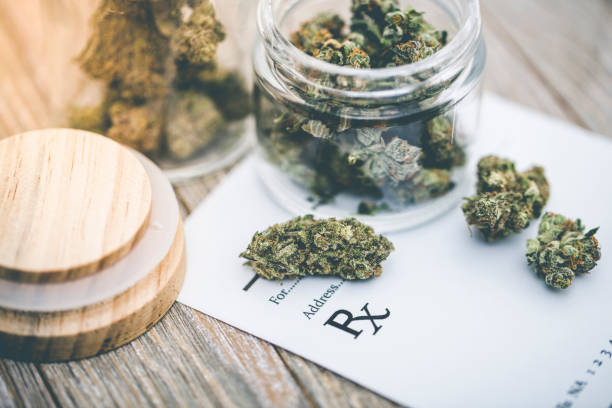
Medical marjiuana can also be used in these situations. It has more health benefits than alcohol and is a much safer alternative. However, it is important to keep in mind that there are certain risks with cannabis, especially when consumed often and in very high doses. One such risk is the development of cannabis dependence or cannabis use disorder, which basically causes the patients to have an addiction to marijuana.
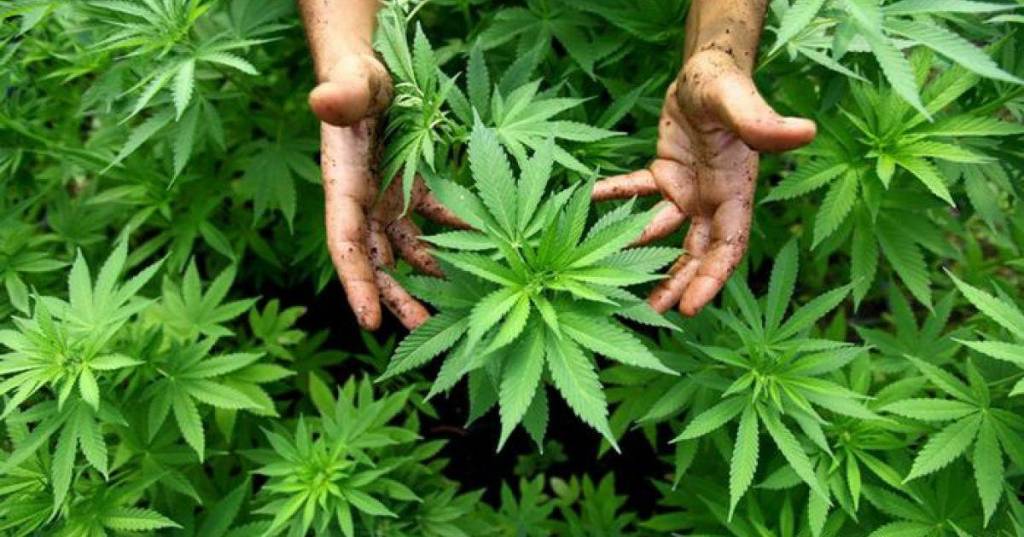
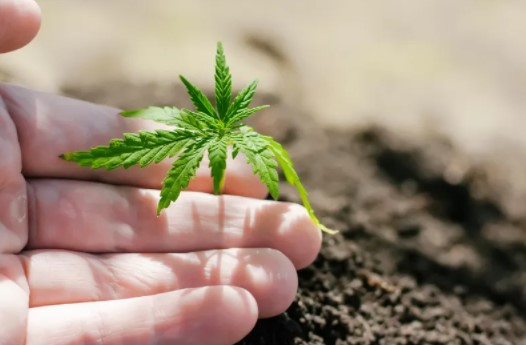
Cannabis and Regenerative Agriculture 

Fossil fuels and agriculture are a major part of climate change, with the impact of this being a major topic, since cannabis processing is getting faster and more pronounced, it’s important for the industry to take responsibility when it’s needed. 

How cannabis creates environmental Impacts 

The impact of this is mostly found in the soil and the ecosystem. This is due to too much cultivation. The farming of cannabis does require a lot of water, which is responsible for droughts, and the wastewater that goes into the soil from the rives does come with some chemicals that are residual. There is also the fact that the compounds that are in cannabis can be volatile, responsible for increasing your ozone levels within the cannabis area, and the carbon footprint that happens from the greenhouse and grow room is another big issue. 

Splitting the cultivation is something that businesses can’t necessarily do, and it won’t fix all of the issues with cannabis growth. The goal Is to offer more customized, ethical practice of providing agriculture that’s sustainable, and regenerative agriculture is something lots of businesses are looking for the ability to take care of growing cannabis effectively. 

So what is regenerative agriculture 

This is basically where you improve the biodiversity, and local variants of this usually are something you find hanging around, and they’ve been around for a bit. 

The goal is to evolve all of this, creating “closed loop” operations that let you restore the natural elements of the water, soil, air, and various ecosystems, offering better yields with the growing harvests. 

Regenerative agriculture is also going another step further than regular agriculture, offering healing aspects on the environment, improving the quality of crops, but that’s of course, much easier said than done. 

Hemp for example, does have the ability to sequester the substances which are toxic in solid that are polluted, generating them into better, more arable land as time goes on. Not just that, the large canopy also allows the prevention of bad weed growth, and it can be something that has a lot of applications that are eco friendly and help others. Regardless of the crop this is used, this is something that can help mitigate the impact that farming has on the environment, which is why It’s something that may be more economically efficient with time, but right now, organic farmers do steer clear of this because it’s not something that’s super popular. 

Dry farming 

However, there are some people who have found an alternative to regular farming for regenerative farming, and that is dry faming.  This is a fad sort of farming, and it’s something that’s used in California, where they maximize the output, and it’s something that’s been interesting in some cases, since it does save you some water. 

It’s something that allows the crops that are in dry areas to grow water, and it allows them to save some water as well. It also doesn’t need as many herbicides and the like for the growing of this, and it also includes reducing the amount of fertilizer that’s used too, and energy as well. 

Dry farming utilizes different techniques, and cannabis is something that’s largely become popular with this type of growing mean. It involves adding organic matter that’s aged, and double digging the sol so it aerates. You need to tend to the soil in a careful manner if you do this, and capture the rainfall, along with dry mulching. The solutions are still being looked at, but hopefully we have an answer to the growing climate change problems and farming soon. 

A history of Cannabis in America 

A lot of people are using cannabis more and more every single year. A lot of people use this for the holidays, and also to unwind. While cannabis does have some recent prevalence, it’s not totally new. In fact, it’s something that’s been legal for far longer than the illegal nature of this.Here is a brief look at cannabis, and the history of usage within the US. 

Predating the US 

This was something that did get brought to the US and was a part of colonies in Britain. However, it also played a key role in a lot of other businesses too, such as reconstruction and the like. It was even ordered within Jamestown that the farmers had to grow some hemp. 

Back then, there wasn’t a difference between cannabis and hemp, and the term for this was actually something that didn’t come around till about 1753 within the US. Hemp is basically anything with less than .3% THC, and cannabis has a lot more than that.

The Founding Fathers Loved Hemp 

The people who helped form this country actually loved hemp, and they even grew some of this for their own usage and consumption too! 

Thomas Jefferson even talked about how he preferred to grow hemp, rather than tobacco. It was seen as a good crop for industries, but there were plenty of benefits that were there as well, especially for the psychoactive reasons too.

Jefferson supposedly brought some of the seeds back after he went to China. Since this was first domesticated within Asia, and since then, the region has a lot of landrace strains that you can use, including Afghani and Thai Stick, some even said that he brought the more unique parts of this there, so that people could grow it as well.

It’s also interesting to note that the Declaration of Independence, which helped get the American colonies away from Britain’s control, was also  something that used hemp. They used processed hemp, converted this to parchment, and people signed this on there. 

But it’s more than just something used for writing. George Washington wrote about separating out the plants, and he was definitely interested in the properties that were psychoactive within cannabis, and he probably did some experimentation to see if there was any way to boost the levels of THC within this.

While there is some speculation, some people do think that the Founding Fathers loved to smoke hemp.  It’s something that wouldn’t necessarily be too off. 

Crop to Contraband 

Cannabis was used for over 300 years as a cash crop, even after the distinction between the and marijuana. 

However, in 1916, it was found through some publishing by the USDA that hemp actually created four times the amount of paper, and it was sustainable. 

There were over 25,000 different usages for this, but then, when the marijuana tax act came about, it basically banned it all over the country.  This price caused the crop to not be viable to grow, and some believe it was used to further plastic and nylon, emerging industries, and also to integrate the paper companies so that the lumbar groups were able to thrive.

Regardless, it wasn’t fair, especially given that we did have this in place.

Then of course, there were the war gardens, and then, by 1971, the controlled substances act happened, making it a Schedule 1 substance, on the same level as cocaine and LSD. 

Cannabis used to be seen as useful, but the tone changed. Hopefully, with time we can change that tune again as it become s more and more legal.